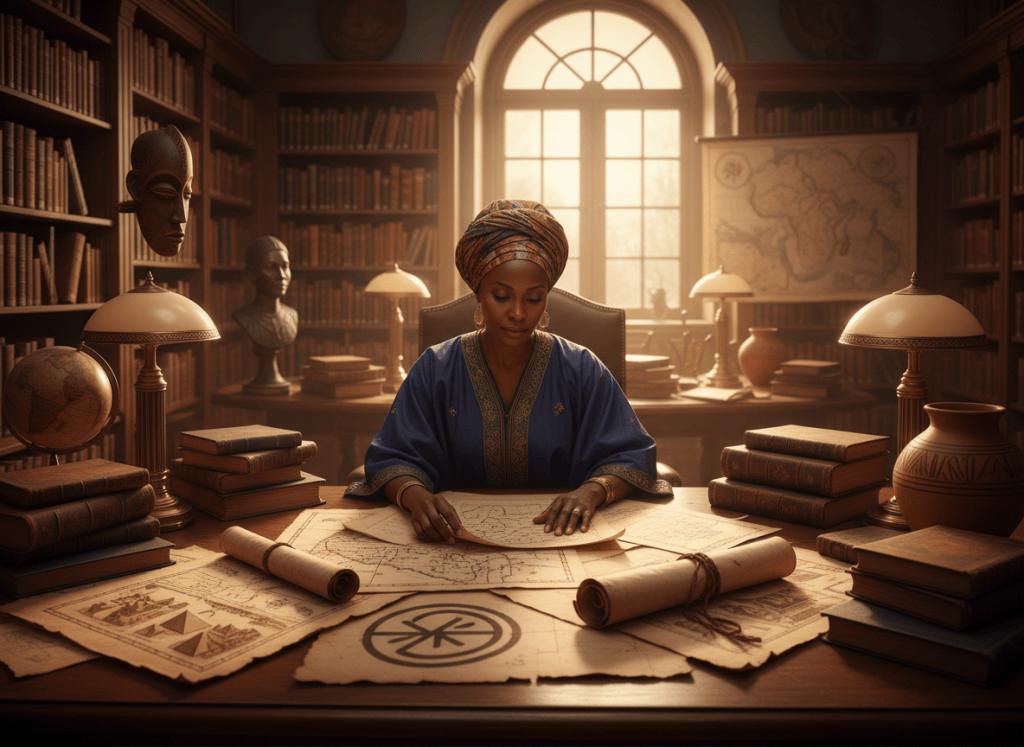
History often comes to us filtered through narrow lenses – lenses that exclude the rich, expansive journeys of Black civilizations whose legacies date back well over 200,000 years. The narrative that dismisses or downplays Black influence on the earliest chapters of human progress is not merely an omission but a distortion with far-reaching consequences.
The book When the World Was Black: The Untold History of the World’s First Civilizations by Supreme Understanding boldly disrupts conventional timelines, presenting a detailed account of ancient Black empires, migrations, innovations, and cultural contributions that mainstream history textbooks omit. This reclamation of history invites us to rethink the foundations of civilization and recognize the profound influence of Black peoples in shaping the world.
In this blog, Melanated Elevation unpacks these revelations, exposes the ongoing distortions in historical narrative, and highlights why embracing authentic Black history is critical for empowerment and societal equity today.
The Untold History: Celebrating Black Civilizations and Their Contributions
Long before the borders and empires recognized in conventional history, Africa was the cradle of complex, thriving civilizations.
Ancient Greats – Nubia, Kush, and Beyond
The Kingdom of Kush, located in present-day Sudan, flourished for over a millennium and rivaled ancient Egypt in military power, culture, and architecture. Nubian pyramids stand testament to a sophisticated society whose contributions shaped pharaonic Egypt itself. Scholars like Dr. Maulana Karenga and Dr. Cheik Anta Diop have tirelessly highlighted this interconnectedness, illustrating how ancient Egypt was fundamentally a Black civilization.
The Nok Culture and Ironworking Innovations
Around 1000 BCE, the Nok culture of Nigeria mastered ironworking, advancing metallurgy far beyond what contemporaneous societies in Europe and Asia achieved at the time. This technological leap supported agricultural productivity, social stratification, and urban development.
Migrations and Knowledge Transmission
Black civilizations were not static – they moved, traded, and exchanged ideas across continents. The Bantu migrations, spreading language and agricultural techniques throughout sub-Saharan Africa, exemplify dynamic cultural evolution, deeply influencing African society as we know it.
These rich histories demonstrate that Black people were not peripheral contributors but central architects of human civilization – pioneers of agriculture, governance, arts, philosophy, and science.
Distortion and Erasure: The Hidden Costs of Biased Histories
Despite overwhelming evidence, European-centric historiography has marginalized Black histories, often relegating them to myth or slavery-centric narratives.
The Legacy of Eurocentrism in Education
Educational systems worldwide tend to frame history through a Eurocentric lens that credits Western societies with “discovering” or “civilizing” the world. This reduces Black civilizations to shadows or footnotes, as noted by historian Dr. John Henrik Clarke, a pioneering figure in Afrocentric scholarship who tirelessly advocated for history told from a Black perspective.
The Myth of Civilizational Superiority
This distortion serves to uphold harmful myths of racial hierarchy, insinuating Black inferiority and justifying centuries of systemic oppression. It’s a deliberate erasure that denies Black people ownership of their cultural legacy and intellectual achievements.
Economic Impacts: How Historical Erasure Perpetuates Inequality
Historical narratives are not neutral – they shape social value, access to resources, and economic power.
Wealth Building Through Cultural Pride and Education
When Black history is either erased or misrepresented, Black communities face a cultural disconnection that undermines confidence and aspirations tied to generational wealth building. Dr. Claud Anderson, author of PowerNomics, stresses that understanding one’s history is foundational to economic empowerment and breaking cycles of poverty.
Representation and Access in Modern Economies
Misrepresentations feed bias within institutions, impacting hiring, entrepreneurship, and investment. Correcting historical distortions can shift narratives, fostering greater representation and equitable policy support, as seen in movements promoting Black-owned businesses and educational equity.
Societal Consequences: Identity, Representation, and Institutional Bias
Distorted histories contribute to systemic social challenges faced by Black communities.
Impact on Identity and Self-Worth
Children and adults growing up with partial or skewed histories grapple with identity confusion and diminished self-esteem. A full, authentic understanding of Black heritage fosters pride, resilience, and collective solidarity – the emotional armor needed to challenge systemic injustice.
Education and Media: The Gatekeepers of Narrative
Selective storytelling in textbooks and media representation perpetuates stereotypes and biases. Activists and scholars like Dr. Joy DeGruy emphasize the necessity of restorative education that affirms Black identity and counters internalized oppression.
Reclaiming History: Pathways to Empowerment and Collective Elevation
Reclaiming and celebrating authentic Black history is not just an academic exercise – it is a radical act of empowerment.
Community Education and Cultural Revival
Grassroots organizations, like the Association for the Study of African American Life and History (ASALH) founded by Carter G. Woodson, promote awareness and cultural education that reconnect communities to ancestral wisdom.
Embracing Spiritual and Intellectual Legacy
Connecting with the spiritual and intellectual traditions of African civilizations enriches contemporary Black identity. Melanated Elevation embraces this, urging our community to honor resilience and brilliance – as expressed through culture, scholarship, and style.
Conclusion: Rise Above Distortions – Embrace Your Legacy
When the World Was Black serves as a foundational text to challenge distorted histories and reveal truths long hidden. Recognizing the deep roots of Black civilizations nurtures pride, counters systemic inequities, and lays the groundwork for economic and social empowerment.
At Melanated Elevation, we urge you to rise above limitations by reclaiming these narratives, educating yourself and your community, and embodying the rich legacy of Black excellence. Your history is your power – wear it boldly, live it fully, and share it widely. Visit us at melanatedelevation.com for more.
Take Action Today
- Dive into authentic Black history resources such as When the World Was Black and the works of scholars like Dr. Cheik Anta Diop, Dr. John Henrik Clarke, and Dr. Claud Anderson.
- Support Black-owned educational initiatives promoting holistic historical perspectives.
- Incorporate your heritage into your personal and professional journey as a source of strength and purpose.
Remember: You’re not just wearing a brand with Melanated Elevation – you’re wearing your legacy. Rise Above Limitations.
Published by Melanated Elevation – Rise Above Limitations.

